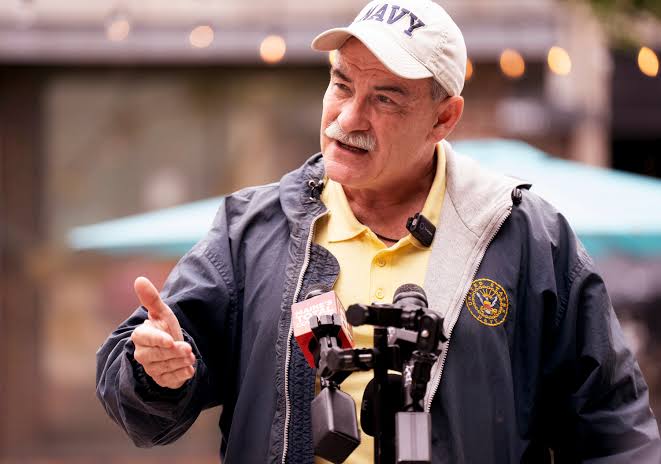
PORTLAND, Maine — In his first local public interview since losing the 2026 Maine gubernatorial race to Democrat Hannah Pingree, Republican nominee Bobby Charles pointed to powerful national headwinds, a massive fundraising disadvantage, and the third-party bid of former GOP state chair Rick Bennett as the primary reasons for his defeat.
Speaking with host Josh Filler on WGAN’s Inside Maine, Charles described the November 3 election as an “anomalous cycle” in which national political sentiments overshadowed state-level economic and quality-of-life issues.
Four Factors Behind the Loss
Charles broke down his campaign’s defeat into four distinct factors that he argued affected Republicans up and down the ballot—including U.S. Senator Susan Collins, who fell to Democratic challenger Troy Jackson, and legislative candidates across the state.
-
National Anti-Trump Sentiment: Charles contended that an “overwhelming anti-Trump sentiment” swept the country and uniquely impacted Maine. He specifically cited frustration over high gas and heating oil prices alongside tariffs targeting Canada—which accounts for 41% of Maine’s trade, according to Charles—as national economic issues that proved impossible for state Republicans to overcome.
-
A “Drift” Toward Democratic Socialism: Charles pointed to the organizing efforts of groups like the Democratic Socialists of America (DSA) and the People’s Alliance, arguing that voters were drawn to progressive messaging at the expense of what he characterized as traditional fiscal responsibility.
-
A Severe Fundraising Disadvantage: While Charles noted his campaign and an allied super PAC raised roughly $3 million—including $1.5 million in small-dollar donations—he said he was heavily outspent. According to Charles, an expected $3 million to $5 million in additional backing from major donors and the Republican Governors Association (RGA) never materialized because national strategists diverted resources to defend battleground states like Texas, Ohio, Georgia, and Alaska.
-
Concerns Over State Oversight: Charles argued that Democratic control of the Legislature, the Attorney General’s office, and district attorney seats leaves Maine without institutional checks and balances, raising concerns about election and government accountability.
The Impact of Rick Bennett’s Independent Bid
Host Josh Filler asked Charles about the impact of Independent candidate Rick Bennett, a former Republican who ran on a more moderate-to-liberal platform.
Charles argued that Bennett “muddied the water” by drawing support primarily from Republican-leaning voters rather than Democrats. However, Charles acknowledged that even if every single vote cast for Bennett had gone to him instead, the race would only have been close—not a victory—given the broader national wave.
Looking Ahead: “Resilience” and Staying Engaged
Filler pressed Charles on why Republicans failed to convince voters that state-level concerns—such as high electricity bills, property taxes, healthcare costs, and substance abuse—were the responsibility of Augusta rather than Washington. Charles responded that “the national tail wagged the state dog,” adding that voters will eventually experience “buyer’s remorse” over the next two to four years.
Despite the loss, the former federal investigator and Bush administration official insisted he is not stepping back from Maine politics.
“I am not retreating one inch,” Charles told Filler, vowing to remain active in advocating for lower property taxes, reduced energy costs, and stricter border and drug enforcement. “History does not end. You just have to go back and keep articulating the things that you know to be true.”
Watch Bobby Charles concedes Maine governor race to Hannah Pingree to see Charles’s remarks to supporters on election night following the race call.
Listen to the full interview HERE