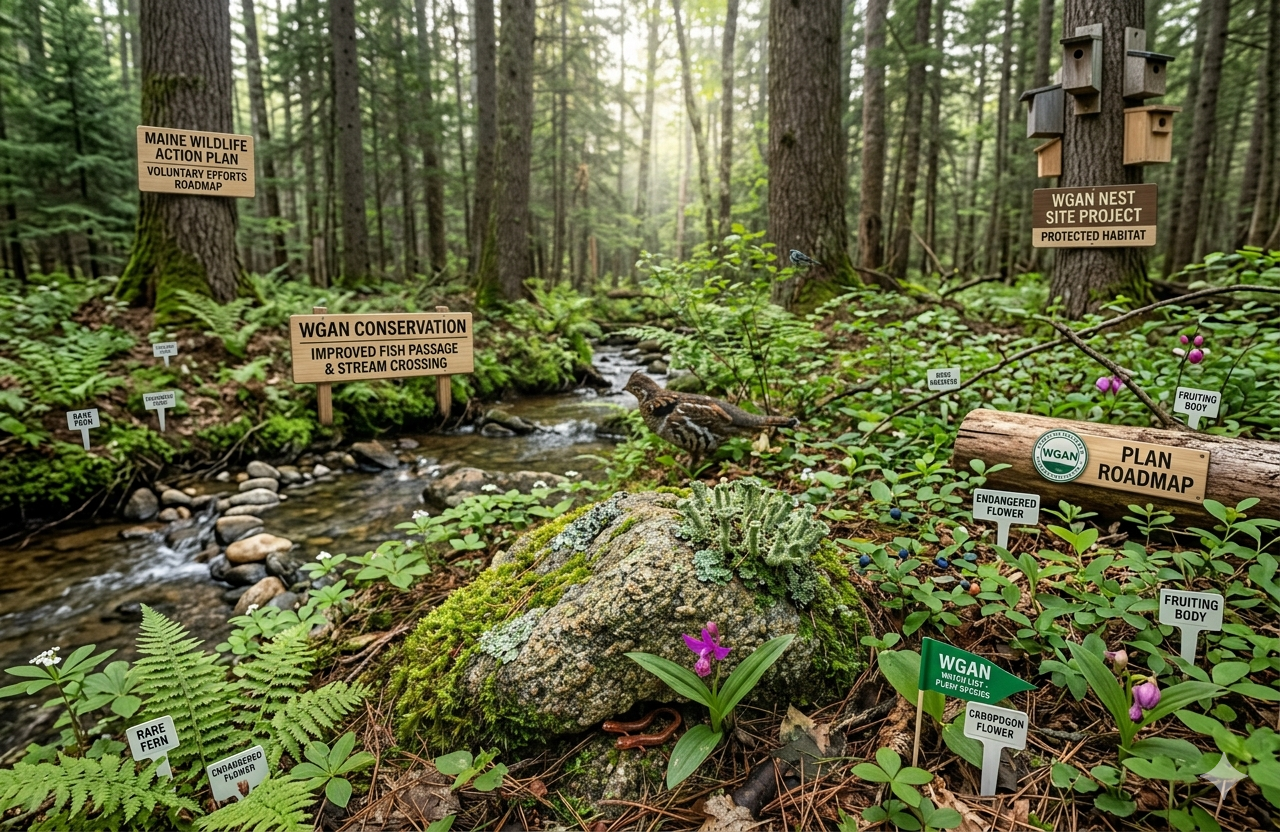
Maine is significantly ramping up its conservation efforts, nearly doubling the number of species on the state’s official wildlife “watch list.”
The updated ten-year Wildlife Action Plan, recently released by the Department of Inland Fisheries and Wildlife (IFW), now encompasses more than 700 species of birds, mammals, and fish. In a historic first, the department has also integrated hundreds of rare plants into the plan.
Why Plants Matter
State officials emphasize that these botanical additions are more than just a census update; they are vital biological indicators. These plants often act as “early warning signs,” signaling shifts in the health of Maine’s most vulnerable habitats before larger wildlife populations are impacted.
A Roadmap for the Future
The Wildlife Action Plan serves as a strategic guide for voluntary conservation initiatives across the state. By identifying at-risk species, the plan encourages targeted actions to combat the dual threats of climate change and rapid land development. Key efforts include:
-
Improving stream crossings to restore natural water flow and fish passage.
-
Protecting critical nesting sites for endangered birds.
-
Restoring habitats that have been fragmented by human activity.
This comprehensive update ensures that Maine’s natural heritage remains resilient in the face of modern environmental challenges.
This article was adapted from original reporting by Maine Public